We Don't Ask for Trust.

We Provide Proof.

We Don't Ask for Trust.

We Provide Proof.

Due Diligence Accelerator Your 4-12 week due diligence workflow, pre-structured. Baseline validation, MRV calibration, legal enforcement, ownership tenure—documented, verified, accessible.

Due Diligence Accelerator Your 4-12 week due diligence workflow, pre-structured. Baseline validation, MRV calibration, legal enforcement, ownership tenure—documented, verified, accessible.

Validated Baseline - Third party audited

Calibrated Monitoring - LiDAR + field measurement

Legal Compliance - EU standard enforcement

Full Source Access - Raw data, original documents

Permanence Protection - 40 year commitment, buffer pool

  • Validated Baseline - Third party audited

    Calibrated Monitoring - LiDAR + field measurement

    Legal Compliance - EU standard enforcement

    Full Source Access - Raw data, original documents

    Permanence Protection - 40 year commitment, buffer pool

The Transparency Engine

The Transparency Engine

Most carbon projects ask you to trust a score.

Most carbon projects ask you to trust a score.

Most carbon projects ask you to trust a score.

We invite you to inspect the evidence.

We invite you to inspect the evidence.

We invite you to inspect the evidence.

Silvador does not abstract trust behind ratings or summaries. We open the project itself—its assumptions, data, legal footing, and monitoring—so buyers can independently verify what is being claimed.

Silvador does not abstract trust behind ratings or summaries. We open the project itself—its assumptions, data, legal footing, and monitoring—so buyers can independently verify what is being claimed.

The Black Box

HOW TRUST USUALLY BREAKS

Buried Assumptions

Baseline assumptions buried in annexes, impossible to trace end-to-end.

Narrative over Data

"Trust us" narratives without access to raw data or decision logic.

Generic Buffers

Generic risk buffers applied without reference to local law, forest practice, or ownership reality.

The Glass Box

HOW SILVADOR EARNS TRUST

Source-Linked Claims

Every claim is linked to a specific page, table, or dataset in the audit trail.

Structured for Review

Project data is structured explicitly for rating agency and buyer review, not post-hoc storytelling.

Legal Disclosures

Legal analyses disclosed for additionality, harvesting rights, and permanence—grounded in Romanian forest law.

Visible Monitoring

Monitoring, models, and assumptions are visible, so buyers can follow the carbon outcome from forest compartment to issued credit.

This is not transparency as a slogan.
It is transparency as an operating system.

This is not transparency as a slogan.
It is transparency as an operating system.

Silvador’s Positioning

Silvador’s Positioning

Trust in carbon markets should be earned through inspectable evidence,

not delegated to opaque sources.

Trust in carbon markets should be earned through inspectable evidence,

not delegated to opaque sources.

Buyers don’t need fewer documents. They need clear sightlines.

Buyers don’t need fewer documents. They need clear sightlines.

THE

THE

TRUST

TRUST

STACK

STACK

Five independent checks, each done by someone other than us. Each one could fail the project, and each one has a document you can open.

Five independent checks, each done by someone other than us. Each one could fail the project, and each one has a document you can open.

01 / 05  Romania · EU member state since 2007

EU jurisdiction

The land is owned outright by Silvador Company SRL and Forest Capital SRL, with no tenure disputes, under EU law and independent courts. Harvest is capped by 10-year management plans and every timber transport is tracked in SUMAL 2.0.

2007EU member state · political risk scored 0 in Verra's risk tool v4.2
Checked byForest authority · Verra risk toolOn your sideLegal
Scroll to build the stack
01 / 05
Before you claim
Credit type
Emission reductions from avoided harvest (VM0012)
ICVCM CCP label
Not yet. ICVCM's decision on VM0012 is pending
CORSIA
The project meets Verra's CORSIA criteria. Credits can be used for CORSIA once Romania issues an Article 6 authorisation
Fits
Contribution claims and ESRS E1-9 disclosure. Not product "carbon neutral" claims (EU ECGT)

Every layer above has its source file in this data room.

See the evidence for each layer

Evidence Explorer

Evidence Explorer

Evidence Explorer

Complete project documentation organized by the four pillars of carbon credit due diligence. Every claim is traceable to source files—no summaries, no interpretations, just verified evidence

Search…

4

Rating Categories

2

VVB Verifications

3

Certifications ( VCS + FSC + SD VISTA )

2023–2024 · AENOR

2020–2022 · EPIC

1

Additionality

Would this have happened without carbon finance ?

VVB VALIDATED

Financial Additionality

Investment Analysis for Additionality Assessment

Additionality is tested at validation and carries into every verification. The 30-year NPV comparison still applies; AENOR confirmed PAI-2 meets the same eligibility conditions when it joined on 1 January 2023.

VT0001 Tool

XLSX

Baseline Selection

Choosing a Baseline Scenario

Same baseline logic for both project areas: legal harvest under the Romanian Forestry Code is the most plausible alternative. Unchanged since validation.

Methodology

PDF

Legal Baseline

Forest Management Plans · PAI-2

The 9 amenajamente silvice for the PAI-2 forests, plus the forest district's confirmation of the harvest volumes that would have been cut without the project.

Legal Records

Folder

2

Carbon Accounting

Model choices, baseline assumptions, over-crediting risk

CONSERVATIVE BASELINE

Core Documentation

Monitoring Report v1.4

VM0012 monitoring for PAI-1 and PAI-2 (2,320 ha): carbon pools, CBM-CFS3 modelling, 10% leakage, 1.5% uncertainty deduction. 37,551 t gross → 25,778 VCUs.

MR

PDF

Quantification

GHG Calculations

CBM-CFS3 model runs on a Tier III inventory, harvested wood products, emissions, uncertainty (project error 7.39%) and the master GHG workbook. Verra accepted the CBM-CFS3 approach in its review.

Calculator

Folder

Leakage

Leakage Assessment

Activity leakage and MARketz market leakage (10%), with the GFPM model outputs behind them. New in 2023–2024.

MARketz

Folder

Geospatial Data

Spatial · PAI-1 + PAI-2

Geodatabase for both project areas, the PAI-2 boundary in WGS84 (the Registry copy), 15 analysis units and 136 plot locations by survey year.

GIS Data

Folder

VVB Confirmation

AENOR Verification Report + Verra Review

AENOR: on site 13–17 July 2025, 11 plots re-measured (all differences within 0.26%), 28+ interviews, 17 findings, all closed. Verra's own review: 4 findings, all closed. Approved 6 October 2026.

VVB

Folder

3

Permanence

Will the carbon stay stored? Fire, pest, political, and reversal risks

20% RISK RATING

AFOLU Risk Tool

NonPermanence

Non-Permanence Risk Tool v4.2: internal 17 + external 0 + natural 2.8 = 20% risk rating. 7,510 VCUs to Verra's buffer pool. The rating rose from 11% because v4.2 no longer lets good management offset the 40-year longevity score.

VCS Risk Tool

Folder

Management Quality

FSC Documentation

100% of the project area FSC-certified, confirmed by AENOR. 1,282.9 ha newly certified during 2023–24. Certificates for 2023, 2024 and 2026.

FSC

Folder

TENURE SECURITY

Deeds and Representations

AENOR verification deed (10 Dec 2025), issuance representation (18 Dec 2025) and land ownership declarations per forest. AENOR's conclusion: ownership is “unconditional, undisputed and unencumbered”.

LEGAL RECORDS

Folder

4

Safeguards & Co-Benefits

Community impact, benefit - sharing, stakeholder engagement

SD VISTA 2020–22

Community Engagement

Stakeholder

Public consultation in Târgoviște on 9 April 2025. No comments and no grievances in 2023–24. AENOR interviewed rangers, a beekeeper, an NGO, a sawmill and local hunters on site.

Engagement

PDF

SDG Validation

SD VISta (2020–2022)

SD VISta was validated and verified for 2020–2022. It was not part of the 2023–2024 verification. This opens the 2020–2022 SD VISta reports.

SD VISta

Folder

2023–2024 · AENOR

2020–2022 · EPIC

1

Additionality

Would this have happened without carbon finance ?

Financial Additionality

Investment Analysis for Additionality Assessment

Additionality is tested at validation and carries into every verification. The 30-year NPV comparison still applies; AENOR confirmed PAI-2 meets the same eligibility conditions when it joined on 1 January 2023.

VT0001 Tool

XLSX

Baseline Selection

Choosing a Baseline Scenario

Same baseline logic for both project areas: legal harvest under the Romanian Forestry Code is the most plausible alternative. Unchanged since validation.

Methodology

PDF

Legal Baseline

Forest Management Plans · PAI-2

The 9 amenajamente silvice for the PAI-2 forests, plus the forest district's confirmation of the harvest volumes that would have been cut without the project.

Legal Records

Folder

2

Carbon Accounting

Model choices, baseline assumptions, over-crediting risk

Core Documentation

Monitoring Report v1.4

VM0012 monitoring for PAI-1 and PAI-2 (2,320 ha): carbon pools, CBM-CFS3 modelling, 10% leakage, 1.5% uncertainty deduction. 37,551 t gross → 25,778 VCUs.

MR

PDF

Quantification

GHG Calculations

CBM-CFS3 model runs on a Tier III inventory, harvested wood products, emissions, uncertainty (project error 7.39%) and the master GHG workbook. Verra accepted the CBM-CFS3 approach in its review.

Calculator

Folder

Leakage

Leakage Assessment

Activity leakage and MARketz market leakage (10%), with the GFPM model outputs behind them. New in 2023–2024.

MARketz

Folder

Geospatial Data

Spatial · PAI-1 + PAI-2

Geodatabase for both project areas, the PAI-2 boundary in WGS84 (the Registry copy), 15 analysis units and 136 plot locations by survey year.

GIS Data

Folder

VVB Confirmation

AENOR Verification Report + Verra Review

AENOR: on site 13–17 July 2025, 11 plots re-measured (all differences within 0.26%), 28+ interviews, 17 findings, all closed. Verra's own review: 4 findings, all closed. Approved 6 October 2026.

VVB

Folder

3

Permanence

Will the carbon stay stored? Fire, pest, political, and reversal risks

AFOLU Risk Tool

NonPermanence

Non-Permanence Risk Tool v4.2: internal 17 + external 0 + natural 2.8 = 20% risk rating. 7,510 VCUs to Verra's buffer pool. The rating rose from 11% because v4.2 no longer lets good management offset the 40-year longevity score.

VCS Risk Tool

Folder

Management Quality

FSC Documentation

100% of the project area FSC-certified, confirmed by AENOR. 1,282.9 ha newly certified during 2023–24. Certificates for 2023, 2024 and 2026.

FSC

Folder

TENURE SECURITY

Deeds and Representations

AENOR verification deed (10 Dec 2025), issuance representation (18 Dec 2025) and land ownership declarations per forest. AENOR's conclusion: ownership is “unconditional, undisputed and unencumbered”.

LEGAL RECORDS

Folder

4

Safeguards & Co-Benefits

Community impact, benefit - sharing, stakeholder engagement

Community Engagement

Stakeholder

Public consultation in Târgoviște on 9 April 2025. No comments and no grievances in 2023–24. AENOR interviewed rangers, a beekeeper, an NGO, a sawmill and local hunters on site.

Engagement

PDF

SDG Validation

SD VISta (2020–2022)

SD VISta was validated and verified for 2020–2022. It was not part of the 2023–2024 verification. This opens the 2020–2022 SD VISta reports.

SD VISta

Folder

INDEPENDENTLY VERIFIED

INDEPENDENTLY VERIFIED

Two independent auditors have walked this forest. EPIC visited 10 times and re-measured 18 sample locations in 2024. AENOR spent five days on site in July 2025 and re-measured 11 plots with its own LiDAR. The numbers checked out both times. Every point on this map is real, verified, and downloadable.

136

PERMANENT PLOTS

15 analysis units · 1 plot per 17 ha—exceeds VCS sampling requirements

15 analysis units · 1 plot per 17 ha—exceeds VCS sampling requirements

11 + 18

PLOTS RE-MEASURED

AENOR 2025 (all within 0.26%) · EPIC 2024 · DBH, height, species

AENOR 2025 (all within 0.26%) · EPIC 2024 · DBH, height, species

2

VVB VERIFICATIONS

EPIC 2020–22 · AENOR 2023–24 · next period from 2025

EPIC 2020–22 · AENOR 2023–24 · next period from 2025

1.5%

UNCERTAINTY DEDUCTION

Project error 7.39% (≤ 10%), deduction per VM0012

Project error 7.39% (≤ 10%), deduction per VM0012

SEE EVERY CLAIM ON THE MAP

Every boundary, analysis unit, and measurement point below is the same data you can download and verify in your own GIS software.

Every boundary, analysis unit, and measurement point below is the same data you can download and verify in your own GIS software.

Layer Control
45.0000° N · 25.0000° E
Loading spatial data…

Download Spatial Datasets

Download Spatial Datasets

Don't take our word for it. Load these into your own GIS software and verify boundaries, plot locations, and forest structure independently.

Project Boundary (PAI-1, 2020–2022)

Project Boundary (PAI-1, 2020–2022)

PAI-1, the 1,538 ha verified for 2020–2022: legally registered coordinates checked by independent auditors. The full 2,320 ha verified for 2023–2024 is in the Geodatabase 2023–2024 below.

PAI-1, the 1,538 ha verified for 2020–2022: legally registered coordinates checked by independent auditors. The full 2,320 ha verified for 2023–2024 is in the Geodatabase 2023–2024 below.

Forest Analysis Units (PAI-1)

Forest Analysis Units (PAI-1)

PAI-1 is divided into 14 analysis units based on leading species, site class and management type (15 with PAI-2, in the 2023–2024 geodatabase). This ensures carbon measurements represent the entire forest, not just the best parts.

PAI-1 is divided into 14 analysis units based on leading species, site class and management type (15 with PAI-2, in the 2023–2024 geodatabase). This ensures carbon measurements represent the entire forest, not just the best parts.

Monitoring Plot Locations (PAI-1)

Monitoring Plot Locations (PAI-1)

110 permanent measurement points in PAI-1, randomly placed and physically marked with steel stakes. Auditors can return to the exact same spots every 5 years to verify growth claims. All 136 plots (PAI-1 + PAI-2) are in the 2023–2024 geodatabase.

110 permanent measurement points in PAI-1, randomly placed and physically marked with steel stakes. Auditors can return to the exact same spots every 5 years to verify growth claims. All 136 plots (PAI-1 + PAI-2) are in the 2023–2024 geodatabase.

LIDAR Ground Data

LIDAR Ground Data

3D laser scans from two sources: professional-grade ZEB-GeoSLAM scanners and Arboreal (an iPhone LIDAR app). Both are cross-checked against manual measurements with traditional forestry tools. Three methods, one answer.

3D laser scans from two sources: professional-grade ZEB-GeoSLAM scanners and Arboreal (an iPhone LIDAR app). Both are cross-checked against manual measurements with traditional forestry tools. Three methods, one answer.

PAI-2 Boundary (2023–2024)

PAI-2 Boundary (2023–2024)

The 783 ha added on 1 January 2023, in WGS84: the same file Verra holds in the registry. Load it next to PAI-1 to see the full 2,320 ha.

The 783 ha added on 1 January 2023, in WGS84: the same file Verra holds in the registry. Load it next to PAI-1 to see the full 2,320 ha.

Geodatabase 2023–2024

Geodatabase 2023–2024

The GIS package AENOR audited: PAI-1 and PAI-2 stands, 15 analysis units and all 136 plot locations by survey year (2022, 2024, 2025).

The GIS package AENOR audited: PAI-1 and PAI-2 stands, 15 analysis units and all 136 plot locations by survey year (2022, 2024, 2025).

HOW WE MONITOR THE FOREST

Verified tonnes mean nothing if the forest is gone. Here's how we track the project area from day one through every verification—and how you can check our work.

Monitoring Plot Locations

No cherry-picking

Plots are randomly placed across all 15 analysis units with minimum spacing rules. We can't choose where to measure.

Meaningful change detection

We flag forest loss greater than 0.5 hectares—large enough to matter, small enough to catch early.

Eligibility verification

Climate and ecosystem overlays confirm the land qualifies under VCS program rules.

STEP 1 - DEFINE WHAT COUNTS

Project boundary + forest zones

We publish the exact project boundary and the 15 analysis units used in calculations—so anyone can trace where accounting applies and verify we’re measuring the whole area, not just the best parts.

Downloadable GIS: Full project boundary (SHP/KML) with parcel-level detail

STEP 2 - MEASURE REALITY

LiDAR Survey Data

3D laser scans from two sources: professional-grade ZEB-GeoSLAM scanners and Arboreal (an iPhone LiDAR app). Both are cross-checked against manual measurements with traditional forestry tools. Three methods, one answer.

EPIC VVB Finding: Three-method calibration verified · AENOR (2025) re-measured with its own ZEB LiDAR

STEP 3 - WATCH THE FOREST CONTINUOUSLY

Permanent plots → inventory

136 permanent plots installed across all forest zones, measured and re-measured every 5 years. This is the field evidence that checks whether our models match reality.

EPIC (2024): 18 plots re-measured · AENOR (2025): 11 of 136 plots re-measured, all within 0.26%

STEP 4 - CATCH ANY LOSS

Satellite change detection

Satellite imagery scans the entire project area every few weeks. If forest cover drops by more than 0.5 hectares anywhere, we investigate. No loss event in 2020–2024 (confirmed by EPIC and AENOR). The one disturbance, a 0.59 ha fire at Mănești in 2024, was mapped and reviewed by AENOR on site.

No loss event 2020–2024 · 0.59 ha fire reviewed

STEP 5 - VERIFICATION

UPDATE EVERY VERIFICATION

Every verification period starts fresh: we check for boundary changes, update the inventory with new measurements, and recalculate using the latest imagery and LiDAR. The numbers always reflect current reality.

EPIC + AENOR VVB findings: full inventory recalculation confirmed each period

NOTHING TO HIDE

Every boundary, every plot location, every measurement zone—downloadable and auditable. Run your own checks, or have your team do it. The data is yours.

CHECK THE REGISTRY

Don’t take our copy. Every issuance, serial number and retirement for VCS 4511 is public on Verra’s registry, with the auditors’ reports and Verra’s own reviews.

THE DOCUMENTS THAT MATTER

CORE DOCUMENTS

CORE DOCUMENTS

CORE DOCUMENTS

The files behind every number on this page, grouped by verification period. Start with the auditor’s report: it’s the independent verdict on everything else.

Search…

2023–2024 · AENOR · SECOND VERIFICATION (LATEST)

MRV

START HERE

THE AUDITOR’S VERDICT. AENOR Verification Report v1.2

Independent auditor • 5 days on site • 17 findings raised, all closed

Why this matters: AENOR re-checked everything for 2023–2024, the first period with both project areas. They re-measured 11 plots with their own LiDAR, reproduced every sheet of the GHG model and interviewed 28+ people. What to look for: the findings table (Appendix 2), the plot re-measurement results (Section 2.3) and the final opinion (Section 5): reasonable assurance, no qualifications.

v1.2 (15-Sep-2026)

MRV

METHODOLOGY

HOW WE COUNT. Monitoring Report v1.4

VM0012 • PAI-1 + PAI-2 • CBM-CFS3 model

Why this matters: the full calculation for 2023–2024. Every assumption, equation and data source behind the 25,778 VCUs. What to look for: the added PAI-2 area (Section 1), the CBM-CFS3 modelling (Section 4), leakage and uncertainty (Section 5.4) and the buffer on the gross carbon change, as Verra required.

Period: Jan 2023 – Dec 2024

Gross reductions: 37,551 tCO₂e

VCUs issued: 25,778

v1.4 (28-Aug-2026)

MRV

BUFFER POOL

WHY IT STAYS. Non-Permanence Risk Report

NPR Tool v4.2 • Buffer pool calculation

Why this matters: determines how many tonnes go into Verra’s buffer pool as insurance against reversals. Our rating rose from 11% to 20% because the new tool (v4.2) no longer lets good management offset the 40-year longevity score. What to look for: internal risk (17), external risk (0), natural risk (2.8).

Risk Rating: 20%

Internal: 17 pts

Natural: 2.8 pts

v1.0 (25-Aug-2026)

MRV

REGISTRY REVIEW

VERRA’S OWN CHECK. Verra Project Review Report

Registry review of the verification • 4 findings, all closed

Why this matters: after the auditor, Verra reviews the verification itself. Its 4 findings (boundary projection, carbon fraction, ex-post workbook, buffer base) are all closed. The buffer correction reduced issuance by 752 VCUs. What to look for: Finding 4.

Findings: 4, all closed

Review type: Verification

Status: Approved

Approved (06-Oct-2026)

MRV

LEGAL

SIGNED AND BINDING. Deeds and Representations 2023–2024

VVB verification deed • Issuance representation

Why this matters: AENOR’s verification deed and our issuance representation are legally enforceable statements to Verra and to every VCU holder, under English law. What to look for: the scope (1 Jan 2023 – 31 Dec 2024) and the signatories.

Verification deed: 10 Dec 2025

Issuance representation: 18 Dec 2025

Governing law: English

Dec 2025

2020–2022 · EPIC · FIRST VERIFICATION

MRV

START HERE

THE AUDITOR'S VERDICT. Independent Validation & Verification Report (VVB)

Independent auditor • 10 site visits • 7 findings raised, all resolved

Why this matters: The auditor's verdict. VVB physically visited the forest, re-measured our plots with their own equipment, and checked every calculation. If you only read one document, read this one. What to look for: How the auditor verified tree measurements (Section 2.4), whether they found errors in our carbon model (Appendix A—7 findings, all closed), and their final conclusion on methodology compliance (Section 5).

v1.3 (07-Nov-2024)

MRV

METHODOLOGY

HOW WE COUNT. Project Description & Monitoring Report v1.8

Complete methodology • Baseline logic • Carbon quantification

Why this matters: The full technical specification. Every assumption, every equation, every data source is documented here. This is how we calculate each tonne. What to look for: How we determined the baseline harvest scenario (Section 3), why the project wouldn't happen without carbon finance (Section 4—investment analysis), carbon stock calculations (Section 5), and the monitoring plan (Section 6).

Period: Aug 2020 – Dec 2022

Net Stocks: 62,040 tCO₂e

Buffer: 6,824 VCUs

v1.8 (07-Nov-2024)

MRV

BUFFER POOL

WHY IT STAYS. Non-Permanence Risk Report

AFOLU Risk Tool v4.0 • Buffer pool calculation

Why this matters: Determines how many tonnes go into the buffer pool as insurance against reversals. Lower risk = more credits issued. Our 11% rating reflects strong project management and low natural risk. What to look for: Internal risk scoring (project management, financial viability, longevity), external risk (land tenure, political stability), and natural risk (fire, pest, weather). Each category adds points that determine the final buffer percentage.

Risk Rating: 11%

Internal: 10 pts

Natural: 1 pt

v1.3 (07-Nov-2024)

MRV

SAFEGUARDS

NO HARM DONE. SD VISta Validation Report (VVB)

Social & environmental co-benefits • SDG contributions verified

Why this matters: Independent proof that the project benefits local communities, not just carbon accounting. EPIC verified stakeholder engagement, confirmed no negative impacts, and validated SDG contributions. What to look for: Stakeholder engagement findings (Section 3.3), community impact assessment (Section 4), environmental co-benefits (Section 5), and the list of SDGs the project contributes to: SDG 12 (Responsible Consumption), SDG 13 (Climate Action), SDG 15 (Life on Land).

SDGs Validated: 12, 13, 15

Grievances Filed: 0

Findings: All resolved

v1.3 (03-Dec-2024)

MRV

SURVEILLANCE

ANNUAL AUDIT. FSC Forest Management Audits

Annual surveillance • Forest management certification

Why this matters: FSC certification means a separate auditor checks forest management quality every year. This covers worker rights, community relations, biodiversity protection, and illegal logging controls—all factors that reduce permanence risk. What to look for: Principle 4 (community relations), Principle 6 (environmental impact), Principle 9 (high conservation values), and any Corrective Action Requests (CARs). Current status: 100% of project area FSC-certified (confirmed by AENOR in 2025), no major non-conformances.

Certified Area: 100%

Major CARs: 0

Audit Cycle: Annual

2024 Assessment

ISSUANCE RECORD

1st issuance · 2020–2022 · EPIC

54,285 VCUs · monitoring period Aug 2020 – Dec 2022 · serial numbers on the Verra registry

2nd issuance · 16 Oct 2026 · AENOR

13,021 VCUs · vintage 2023 · serials 20328-1156360310 → 1156373330

12,757 VCUs · vintage 2024 · serials 20329-1156373331 → 1156386087

Total issued

80,063 VCUs

Verify every serial number on Verra →

Last updated: 27 October 2026 · second verification (2023–2024) and second issuance added

IFM RATING

IFM RATING

CROSSWALK

CROSSWALK

We’ve mapped our data to the Core Carbon Principles (CCPs) and common Rating Agency risk factors. Mapping only: VCS 4511 credits do not currently carry an ICVCM CCP label. Don’t hunt for answers—find the logic here.

We’ve mapped our data to the Core Carbon Principles (CCPs) and common Rating Agency risk factors. Mapping only: VCS 4511 credits do not currently carry an ICVCM CCP label. Don’t hunt for answers—find the logic here.

Baseline: Over-Crediting Risk

ICVCM CCP 7 • ROBUST QUANTIFICATION

Can the baseline be inflated? Three structural constraints prevent this:

Legal Cap — Harvest quotas fixed by 10-year Forest Management Plans under Romanian Forestry Code, enforced via SUMAL 2.0 digital tracking

Historical Anchor — 5+ years of verified harvest records (2012–2020) establish actual pre-project practice, not theoretical maximums

Model Calibration — CBM-CFS3 projections ground-truthed against 136 permanent field plots (2022–2025); total uncertainty deduction of 1.5% applied to credits.

Additionality: Financial & Legal

ICVCM CCP 5 • ADDITIONALITY

Would this conservation happen without carbon finance? No—and here's the verified proof:

Financial Test - 30-year NPV analysis: Baseline (harvesting) = €5.9M positive vs. Project (conservation) = -€252K. Conservation is financially unviable without VCU revenue.

Regulatory Surplus - Romanian Forestry Code (Law 46/2008) mandates harvesting under approved FMPs, not conservation. A 40-year commitment (to 2060) goes far beyond legal requirements.

Common Practice - Only 2 IFM-LtPF projects exist in Romania. Private forest conservation without philanthropy or grants is effectively non-existent.

Leakage & Market Shifting

RATING AGENCY 'LEAKAGE BELT' CRITERIA

Could avoided harvest simply shift elsewhere, negating the climate benefit? Two structural controls prevent this:

Activity Shifting Blocked - Romanian Forestry Code (Law 46/2008) makes harvest quotas non-transferrable between properties. Silvador cannot legally compensate for reduced harvest in the project area by increasing extraction elsewhere.

Market Leakage Quantified - MARketz Tool analysis across 7 market factors yields 10% deduction, applied to all credits issued. Project represents only 0.1% of national timber supply.

Ongoing Monitoring - Annual verification of harvest volumes on Silvador's forests outside the project area confirms no displacement. Market leakage recalculated at each verification.

Permanence & Buffer Pools

ICVCM CCP 6 • PERMANENCE

What if the carbon is released back to the atmosphere? A transparent risk assessment and mandatory buffer pool protect buyers:

Risk Quantified - AFOLU Non-Permanence Risk Tool v4.2 yields a 20% total risk score for 2023–2024: Internal 17 + External 0 + Natural 2.8 (2020–2022: v4.0, 11%). This percentage of all credits goes to Verra's global buffer pool.

Natural Risks Low — Fire, pests and extreme weather score 2.8 points in total in the verified risk report. The one disturbance in 2020–2024, a 0.59 ha fire at Mănești (2024), was mapped and reviewed by AENOR on site.

Clear Ownership - 100% freehold title held by Silvador Company SRL and Forest Capital SRL. Zero tenure disputes. Romania governance score: 0.26 (World Bank, latest risk assessment).

Double Counting Prevention

ICVCM CCP 8 • NO DOUBLE COUNTING

Could these carbon credits be counted twice? Multiple registry and disclosure controls prevent this:

Registry Exclusivity — Project registered solely under Verra VCS (ID 4511). VVB verified no registration with Gold Standard, Plan Vivo, ICR, or any other GHG program. Declaration letter on file.

Scope 3 Disclosure — Written notification sent to all timber buyers (6 companies) disclosing carbon claims. Public statement on Silvador website prevents downstream double-claiming.

No Stacking - Project has not received renewable energy certificates, EU ETS allowances, or any other form of GHG-related credit. Zero overlap with compliance markets.

Safeguards & Community

ICVCM CCP 9 • SUSTAINABLE DEVELOPMENT

Does this project harm local communities or the environment? Three layers of independent verification confirm net positive impacts:

SD VISta Verified (2020–2022) - Verra's Sustainable Development Verified Impact Standard confirms contributions to SDG 12 (Responsible Production), SDG 13 (Climate Action), and SDG 15 (Life on Land). Zero negative impacts identified

Stakeholder Engagement - Town halls on 28–29 Nov 2022 (about 40 invited, 7 attending each), meetings during the audit 8–11 Jan 2024, a follow-up on 16 Feb 2024 (about 60 invited) and a public consultation in Târgoviște on 9 Apr 2025. Zero grievances filed.

FSC Safeguards - 100% of project area FSC-certified. Principle 4 requires community benefits, worker rights, and conflict resolution mechanisms.

The questions serious buyers actually ask.

FREQUENTLY ASKED QUESTIONS

FREQUENTLY ASKED QUESTIONS

FREQUENTLY ASKED QUESTIONS

All

Methodology

Legal

Risk

Due Diligence

Verification

METHODOLOGY

Why IFM-LtPF instead of REDD+ or ARR?

Because it matches what's actually happening: converting actively harvested private forest to protected forest.

METHODOLOGY

LEGAL

How was the baseline harvest level determined ?

From legally-binding 10-year Forest Management Plans (amenajamente silvice), not projections or estimates.

METHODOLOGY

LEGAL

Who audited this project and what exactly did they verify ?

Two accredited VVBs. EPIC Sustainability Services did the joint validation and first verification (2020–2022), with on-site inspection in January 2024. AENOR verified 2023–2024, with five days on site in July 2025. Verra reviewed and approved both.

RISK

What happens if there’s fire or other reversal event?

Credits are held back in Verra’s global buffer pool, which covers reversals across all AFOLU projects—not just this one: 11% for 2020–2022 and 20% for 2023–2024.

RISK

LEGAL

Why doesn’t the project have a 100-year legal conservation commitment?

Because it’s a commercial forestry company making a 40-year business decision (to 2060), not a land trust. The risk is already priced into the buffer contribution: 20% in the latest verification.

LEGAL

METHODOLOGY

How does Romanian forestry law strengthen project integrity?

Mandatory harvest quotas, digital tracking (SUMAL 2.0), and severe penalties for illegal cutting create a uniquely robust regulatory environment.

DUE DILIGENCE

VERIFICATION

What documentation can I access for my own due diligence?

Everything—VVB report, PD/MR, risk assessments, monitoring data, FSC audits, and calculation workbooks are publicly available or provided on request.

VERIFICATION

What's the verification schedule going forward?

Two verifications are done (2020–2022 and 2023–2024). The next monitoring period runs from 1 January 2025. VCS requires verification at least every 5 years, with continuous monitoring in between.

RISK

Why did the risk rating go from 11% to 20%?

Verra’s risk tool v4.2 replaced v4.0. Good-management credits can no longer go below zero and a 40-year commitment is mandatory, so internal risk rose from 10 to 17 points.

METHODOLOGY

What is PAI-2?

A second project area of 783 ha in Argeș, Dâmbovița and Prahova, added from 1 January 2023. It took the project from 1,538 to 2,320 ha.

Empower your sustainability goals

Make your climate impact real. Buy verified carbon credits now.
Woman In The Water
Woman In The Water
Car
Car
Spary Bottle
Spary Bottle
Woman In The Glass Way
Blue Space
Blue Space
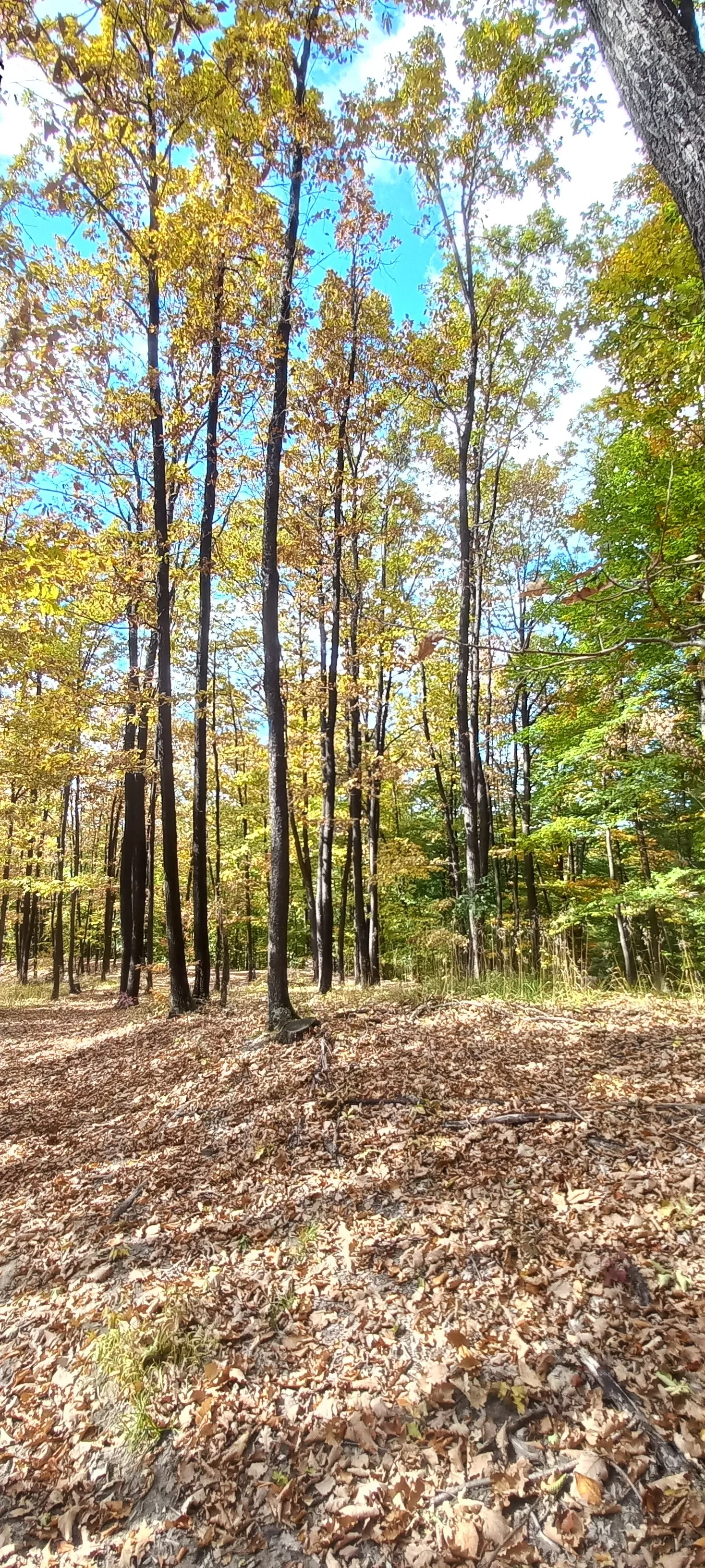
Tall trees with yellow and green leaves stand in a forest on a sunny day. The ground is covered in fallen leaves.
WIne Bottle
WIne Bottle

Get in touch

SILVADOR

©2026

Contact Now

Get in touch

Get in touch

Buying credits, reviewing the project or own a forest? Write to us and the Silvador team will get back to you.

Buying credits, reviewing the project or own a forest? Write to us and the Silvador team will get back to you.

Direct line to the project team

Based in Romania · EET (UTC+2)

Need raw plot data or calculation workbooks? Ask here and we'll share them.